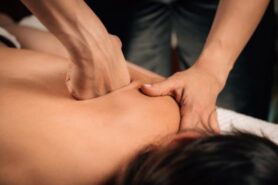
 Deep tissue massage is one of the most effective therapeutic modalities for relieving chronic muscle tension, improving mobility, and supporting recovery after strain or injury. At The Praxis Institute in Miami and Hialeah, Florida, students learn how to perform this advanced technique safely and confidently as part of our comprehensive Advanced Massage Therapy program. Learn more about deep tissue massage training near you in Miami, FL.
Key Takeaways
- Deep tissue massage targets deeper layers of muscle and connective tissue to help relieve chronic tension, reduce pain, and improve mobility.
- This modality uses techniques such as sustained pressure, cross-fiber friction, muscle stripping, myofascial release, and trigger point work.
- Deep tissue massage may help clients dealing with sciatica, carpal tunnel syndrome, plantar fasciitis, muscle injuries, postural strain, and movement restrictions.
- Because it involves deeper corrective work, deep tissue massage should be performed by trained professionals with a strong understanding of anatomy and clinical technique.
- At The Praxis Institute, students learn deep tissue massage as part of a broader advanced massage curriculum that supports careers in clinical, wellness, and rehabilitative settings.
What Is Deep Tissue Massage?
Deep tissue massage is a specialized therapeutic approach that targets deeper layers of muscles and connective tissues. Through slower, more concentrated pressure, massage therapists work beneath the surface layers to release chronic tension and break down adhesions that can interfere with mobility. This modality differs from relaxation-based techniques because it emphasizes corrective work, helping clients overcome muscle tightness, imbalances, and discomfort caused by overuse, injury, or daily stress.
Therapists often use techniques such as:
- Slow, sustained pressure
- Cross‑fiber friction
- Muscle stripping
- Myofascial release
- Trigger point work
Deep tissue massage offers numerous benefits, including pain management, improved postural alignment, enhanced circulation, and reduced inflammation. Because it affects structurally deeper tissues, it must be performed by trained professionals who understand anatomy, clinical assessment, and proper body mechanics. Many clients often need deep tissue massage after surgery, repetitive traumatic injuries, or physical therapy.
When Is Deep Tissue Massage Recommended and for What Clients?
Deep tissue massage is especially effective for clients dealing with chronic tension, restricted mobility, or conditions resulting from injury or overuse. By targeting deeper layers of muscle and fascia, this technique supports healing and reduces discomfort for a wide range of clients. Some conditions it’s used to treat include:
- Sciatica: This condition often develops when tight muscles in the lower back or hips irritate the sciatic nerve. Deep tissue massage loosens the surrounding muscles, reduces inflammation, and improves circulation along the nerve pathway. This approach is often valuable for those with traumatic injuries or long-term back strain.
- Carpal tunnel syndrome: Repetitive movements of the hands and wrists, which are common in office work, manual labor, and certain sports, can lead to nerve compression. Deep tissue massage reduces tension in the forearm and wrist muscles, easing pressure on the median nerve. Clients who perform repetitive-strain activities, such as typing, construction work, or hairstyling, often experience significant relief.
- Plantar fasciitis: This condition results from inflammation and tightness in the foot’s connective tissue. Deep-tissue techniques applied to the calves, feet, and fascia help increase flexibility and reduce pain.
- Muscle injuries and spasms: Muscle tears, spasms, and post‑injury tightness often occur after accidents, sports trauma, or sudden overexertion. Deep tissue massage assists healing by breaking down adhesions, relaxing hyper‑tight muscles, and improving nutrient flow to damaged tissue.
- Poor posture and mobility: Long hours of sitting, heavy lifting, or repetitive movements can create chronic tension patterns that limit flexibility. Deep tissue massage helps release deep-seated knots, improve alignment, and restore functional movement. Office workers, drivers, and healthcare professionals often benefit from treatment for posture-related discomfort.
Enhance Your Practice of Massage Therapy
Deep tissue massage allows therapists to support clients with a wide range of needs, especially those dealing with chronic pain or movement limitations. At The Praxis Institute, students learn deep tissue techniques, as well as:
- Neuromuscular therapy: This technique focuses on identifying and releasing trigger points and areas of nerve compression, helping clients who experience chronic pain, tension patterns, or limited movement due to irritated nerves or overactive muscles.
- Hydrotherapy: The modality uses water and temperature-based applications, such as hot packs, cold compresses, and therapeutic baths, to decrease inflammation, improve circulation, and support clients recovering from strains, sprains, or swelling.
- Electrostimulation: By delivering controlled electrical impulses to targeted muscle groups, electrostimulation helps reduce spasms, enhance mobility, and relieve discomfort for clients experiencing chronic injuries.
- Ultrasound massage: This type of therapy uses sound-wave vibration to penetrate deeper soft tissues, reducing stiffness and encouraging the healing of scar tissue.
Our unique framework presents students with a strong foundation in clinical and corrective bodywork. Students also experience hands-on training in clinical rehabilitation, manual lymphatic drainage, and injury recovery.
Why Choose The Praxis Institute?
At The Praxis Institute, students in the Advanced Massage Therapy program learn deep tissue massage and other therapeutic techniques from our experienced instructors who combine clinical expertise with hands‑on guidance. Our curriculum includes 750 clock hours of instruction and requires students to complete more than 115 supervised services to build experience.
Graduates are prepared to sit for the National Certification Board for Therapeutic Massage and Bodywork (NCBTMB) exam or the Massage & Bodywork Licensing Examination (MBLEx) offered by Federation of State Massage Therapy Boards (FSMTB), giving them a strong pathway into professional practice. With competitive tuition, financial aid options for those who qualify, and flexible start dates, our program offers students balancing school with other commitments the flexibility they need.
Learn Deep Tissue Massage Near You in Miami, Florida
If you’re looking to provide deep tissue massage services, start training at The Praxis Institute. We offer two campus locations near you in Hialeah and Miami, FL. Students learn comprehensive deep tissue massage techniques and advanced massage modalities, including ultrasound, lymphatic drainage, and electrostimulation. We also offer career services that provide personalized aid with interview prep and employer partnerships. To learn more about establishing a career in deep tissue massage, contact us today.
FAQ About Massage Therapy School
Is deep tissue massage always painful?
No. Deep tissue massage may involve firm pressure and some discomfort, but it should remain controlled and within the client’s tolerance.
Who may benefit most from deep tissue massage?
Clients with chronic muscle tightness, limited mobility, repetitive strain, postural tension, or recovery needs after injury may benefit from deep tissue massage.
How is deep tissue massage different from a relaxation massage?
Deep tissue massage focuses on deeper muscle layers and corrective work, while relaxation massage is generally lighter and centered on overall stress relief.
Can deep tissue massage help improve range of motion?
Yes. By reducing tightness and breaking down adhesions, deep tissue massage may help improve flexibility and support better movement.
What sorts of aftercare tips should technicians discuss with clients?
Clients should be encouraged to drink plenty of water and incorporate gentle movement after a deep tissue massage to reduce soreness and support muscle recovery.